
Liquidation Pallets UK: Why Manifests and Grading Matter
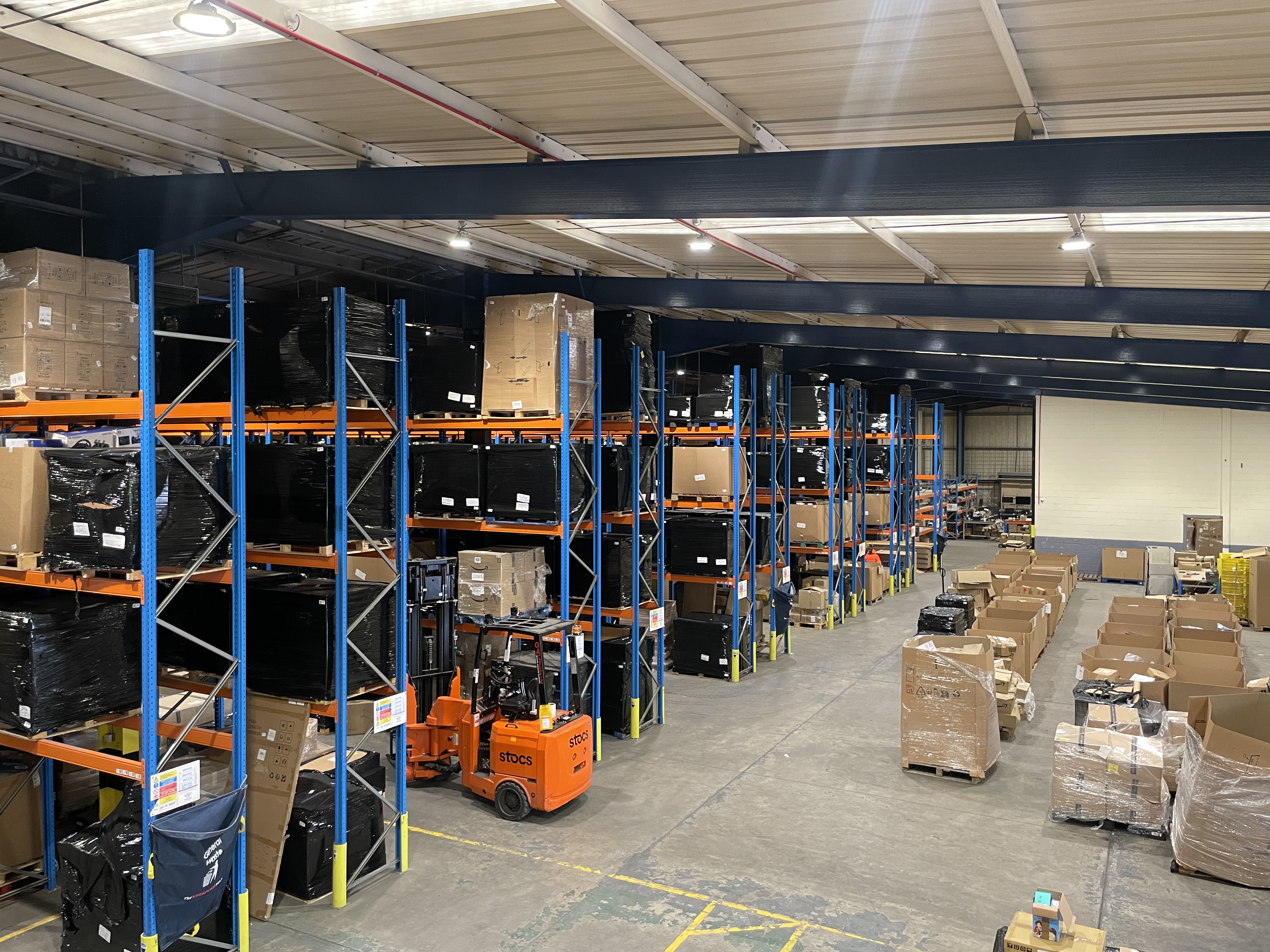
What you're really buying when you buy liquidation pallets
Ask a trade buyer what they are actually purchasing when they buy liquidation pallets in the UK, and the honest answer is not "goods". It is a prediction. They are betting that the description matches the contents, that the grade means what it says, and that the unit costs on the sheet bear some relationship to what the items are worth. Get those three things right and the buyer makes money. Get any one of them wrong and they have bought a problem, however cheap it was. For a long time the clearance trade treated this as an acceptable feature of the market. Vagueness was almost a business model: the less a buyer knew, the more they might pay. Mystery pallets and unmanifested loads still trade briskly at liquidation auctions up and down the country, and there is a legitimate place for them. Some buyers genuinely want the gamble, and price accordingly. But that is not where the volume is going. The buyers growing fastest in this market are the ones running proper businesses with proper unit economics, and they cannot build a business on a coin toss. When we put a qualification tool on our website and asked prospective buyers what mattered most to them, the answers were not what a price-obsessed reading of the market would predict. Grading came first. Shipping came second. Not "cheapest", not "biggest volume": tell me accurately what I am getting, and get it to me reliably. That tells you where the competitive ground has moved.
Manifest accuracy on wholesale pallets: three disciplines, not one
Manifest accuracy on wholesale pallets sounds like a single problem. In practice it is three, and they fail in different ways. Contents integrity. Does the pallet contain what the manifest says? This is the failure everyone thinks of, and it is the least interesting of the three, because it is mostly a matter of doing the work properly. Category integrity. Is the pallet in the right place? This one is subtler and, in our experience, more common. Stock sorted into a slightly wrong category doesn't look wrong on paper. It just quietly disappoints. A pallet listed under one heading that is really a mix of something else will sell, once, to a buyer who then reads your lists more sceptically forever after. We spent time this summer auditing our own sortation categories for exactly this reason: consolidating headings that were splitting similar goods across too many places, and moving finer-grained ranges to box-level sorting so that what a buyer sees on the list is genuinely what is in the lot. Valuation integrity. Are the unit costs credible? This is the discipline most clearance operations skip, and it cuts both ways. Overstate the retail value of a low-value item and a sophisticated buyer will spot it, price the whole list down in their head, and walk. We have had buyers come back to us with a line-by-line challenge on a single item, checking the real market price on a low-value product and telling us plainly that it was priced too high, which was putting them off the entire pallet. That is not an awkward email. That is a buyer doing us a favour. Understate a value, on the other hand, and you have quietly given away someone else's asset. Neither error is acceptable when you are recovering value on behalf of a supply partner. We now run systematic price-correction passes over our stock lists before they go out, researching genuine market prices across multiple retailers rather than assuming a single reference point, and maintaining a corrections ledger so that the same mistake is not made twice. It is unglamorous work. It is also the single highest-leverage thing we do for buyer trust.
Grading stock clearance pallets: a language that has to mean something
Condition grading is where good intentions most often go astray, because the vocabulary is loose and the incentives run one way. "Used" and "refurbished" are not synonyms. "Open box" and "returned" describe different risks. A grade that flatters stock clearance pallets will lift one transaction and cost several. Over recent weeks we revised the condition language across a substantial batch of our consumer listings to describe stock more precisely, in that instance correctly identifying refurbished product as refurbished rather than leaving it under a vaguer heading. The point was not marketing. It was that a buyer should be able to read a grade and know what they are holding. The same principle governs how we route stock in the first place. Not every item belongs in every channel. Product with cosmetic damage but full function behaves quite differently to genuinely new surplus, and both behave differently to untested returns. Rather than pushing everything down one route, we match each lot's profile, value, volume and condition to the resale stage that suits it: the daily overstock list, our Bulk Stocs wholesale platform, our Bid Stocs retail clearance auctions, or clearance. We work to keep those stages from contaminating each other. Transparent grading is what makes that routing possible. You cannot sort honestly into four channels if you are describing everything the same way.
The trust dividend: why UK trade buyers come back
Here is the commercial argument, for anyone who needs one. The market for liquidation pallets in the UK runs on repeat purchase, and repeat purchase runs on trust. A buyer who trusts your manifest buys again without inspecting. A buyer who trusts your grading buys sight-unseen. A buyer who trusts your pricing stops negotiating every line and starts telling you what they want you to look out for. Each of those saves real money, ours and theirs, and every one of them compounds. The reverse compounds too. Every unpleasant surprise is paid for several times over: in the refund, in the discount on the next deal, and in the buyer's permanent decision to read your lists with one eyebrow raised. Surplus inventory is not a market where you can afford to be interesting once. Our stock turns over quickly and our lists go out most weekdays, which means we are asking the same buyers to trust the same paperwork dozens of times a quarter. That volume of repetition is only survivable if the paperwork is right. So we would rather be the supplier whose manifests are dull and correct than the one whose pallets are exciting. Buying liquidation pallets should be a calculation, not a lottery. Making it one is not an administrative overhead. It is the whole proposition.